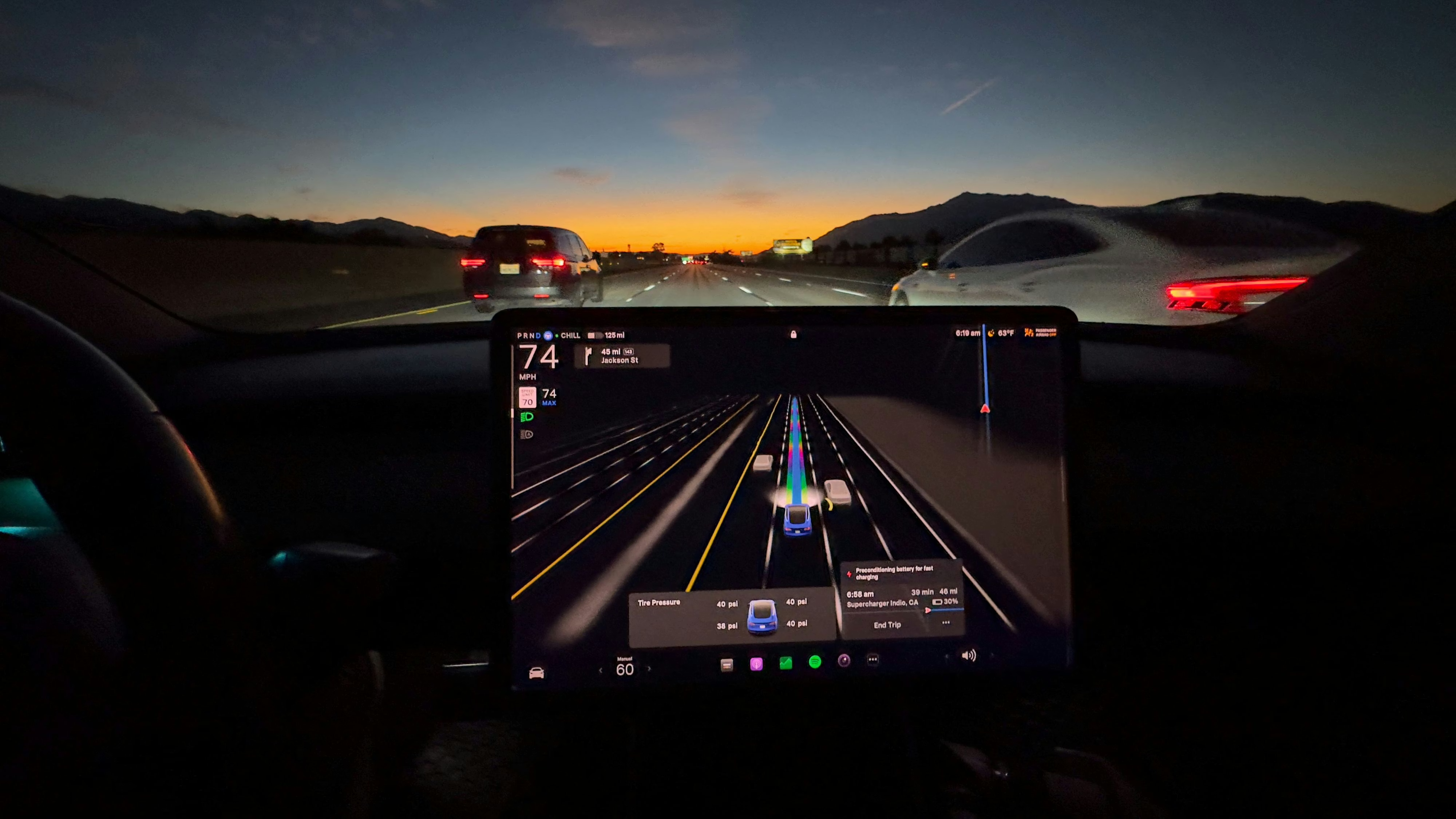
In 2026, Tesla’s Full Self-Driving (Supervised) has shifted from a futuristic novelty to a...
Tesla HW3 Memory Limitations: Why Unsupervised FSD Falls Short
The Q1 2026 Tesla earnings call brought a moment of clarity for millions of owners. For years, the community debated whether Hardware 3 (HW3) could truly handle "unsupervised" autonomy. We now have the definitive answer: it cannot.
Tesla CEO Elon Musk admitted that while HW3 is a marvel of its time, it lacks the physical requirements for the latest AI models. The primary bottleneck isn't raw processing power, but memory bandwidth. HW3 has only 1/8th of the memory bandwidth found in the newer AI4 (Hardware 4) chips. In the world of auto-regressive transformers and real-time AI, memory bandwidth is the chokepoint. Without it, the car simply cannot "think" fast enough to handle complex urban environments without a human safety net.
Key Technical Limitations:
- Bandwidth Bottleneck: 1/8th the data speed of AI4.
- Perception Lag: HW3 relies on 1.2-megapixel sensors, whereas AI4 utilizes 5-megapixel feeds, allowing for much greater "vision" distance.
- Compute Ceiling: Recent fleet data shows AI4 vehicles achieving 450 miles between disengagements, while HW3 struggles to maintain an average of 120 miles.